About The Book
Core pressure
When belief becomes public policy, interpretation becomes power.
Story engine
A text with religious authority threatens to reorder law, memory, and rule.
Best entry point
Start with the prologue, then return here for the larger stakes and framework.
The Hidden Scroll
A novel of reform, kingship, prophecy, and the dangerous force of written words in ancient Jerusalem.
This is the project's central promise: a serious historical novel in which debates over law, sacred memory, and political legitimacy are not background color but the engine of the plot. The stakes are public and intimate at once. To control a text is to influence a kingdom. To believe in it may cost everything.
- Historical Fiction
- Court Intrigue
- Sacred Politics
- Cultural Memory
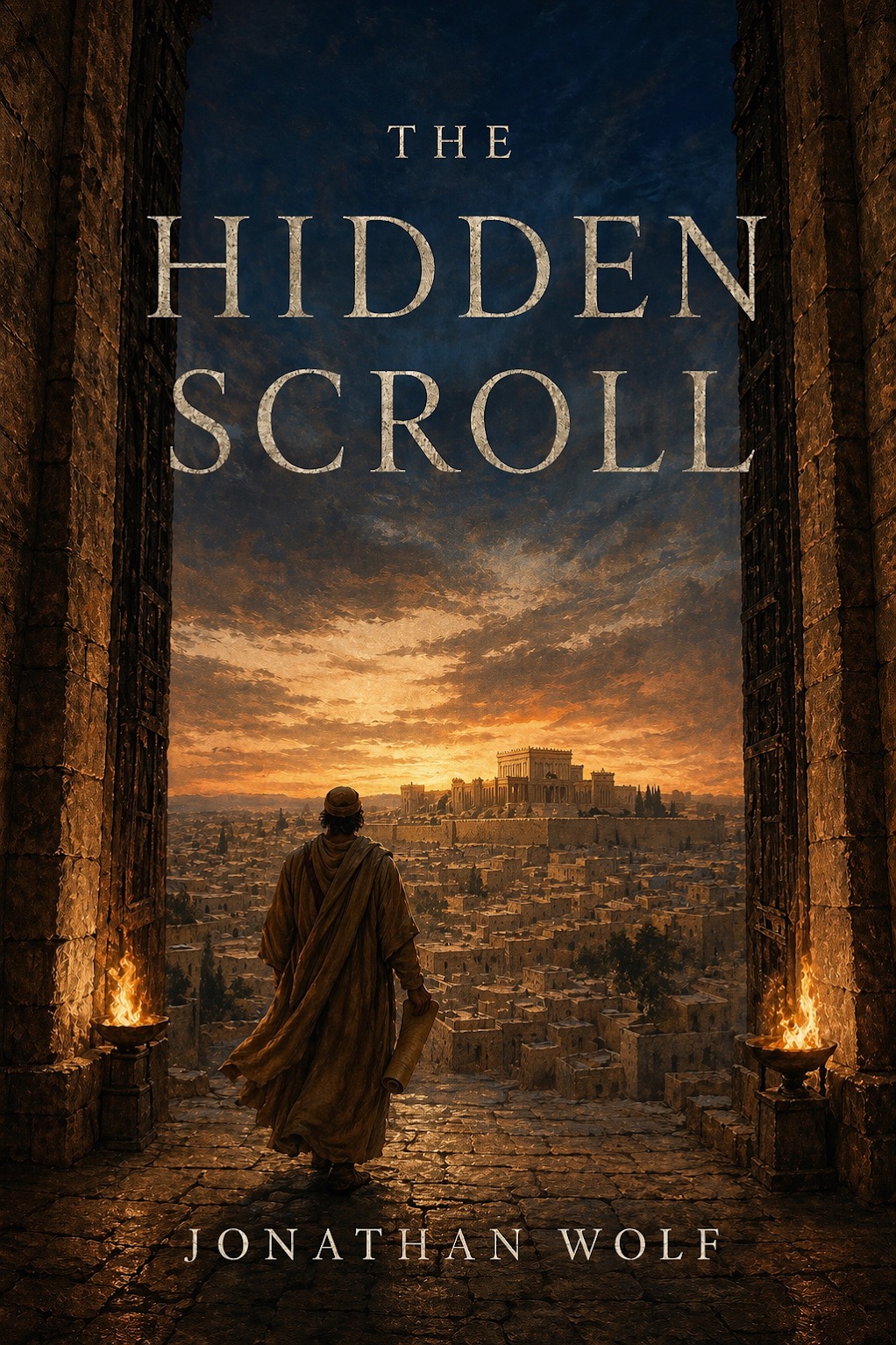
What happens when a kingdom's future depends on how its past is rewritten.
A kingdom trying to define itself
Jerusalem stands at a moment of reform. Royal authority, priestly ambition, prophetic speech, and scribal labor press against each other inside the court of King Josiah. In that atmosphere, the appearance of a text with immense religious and political weight threatens to reorder law, memory, and the legitimacy of those who govern.
The drama of The Hidden Scroll comes from the people forced to act under that pressure: those who see opportunity, those who fear loss, and those who cannot separate devotion from calculation. The novel is concerned not only with belief, but with what belief allows institutions to do.
Thematic foundations
What the novel explores on the page
Authority
The novel asks how law and legitimacy are made persuasive, not merely proclaimed.
Interpretation
Texts matter because people frame them, guard them, and fight over what they require.
Ambition
Reform attracts conviction, but it also attracts calculation, vanity, and opportunism.
Memory
The deeper question is who gets to narrate a people's past when survival feels uncertain.
Reading experience
The book is built for readers who want pressure, not spectacle.
The intended effect is immersive history joined to moral and institutional conflict. The book aims to feel intimate and political at the same time: argument becomes dramatic, reform becomes personal, and public pressure reaches directly into private loyalties.